Epigenomics, rare disease, cancer genomics, and clinical modelling.
Project detail
Epigenomics · 2025
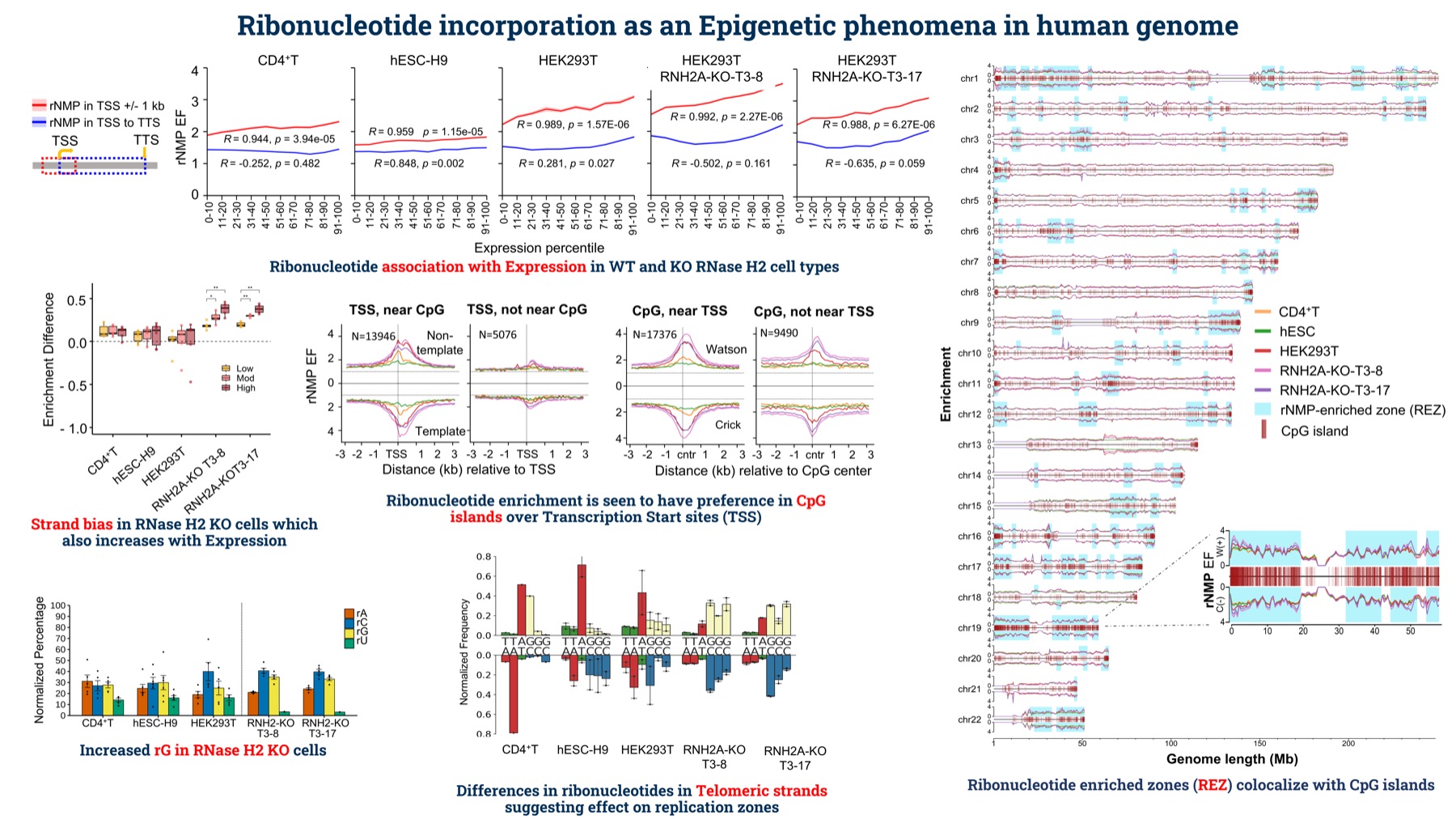
Ribonucleotide enrichment features in the human genome
View full size
The first genome-wide look at ribonucleotide embedment in human cells: CD4+ T cells from
patient blood, a stem cell line (hESC-H9), and HEK293T with and without RNase H2.
Embedded rNMPs are enriched near CpG islands and track with expression and methylation at
transcription start sites. Knocking out RNase H2 introduces a template versus non-template
strand bias absent in wild-type cells, consistent with rG being removed from the
non-template strand, possibly by Top1.
Related paper (in preparation)
Rare disease · 2024
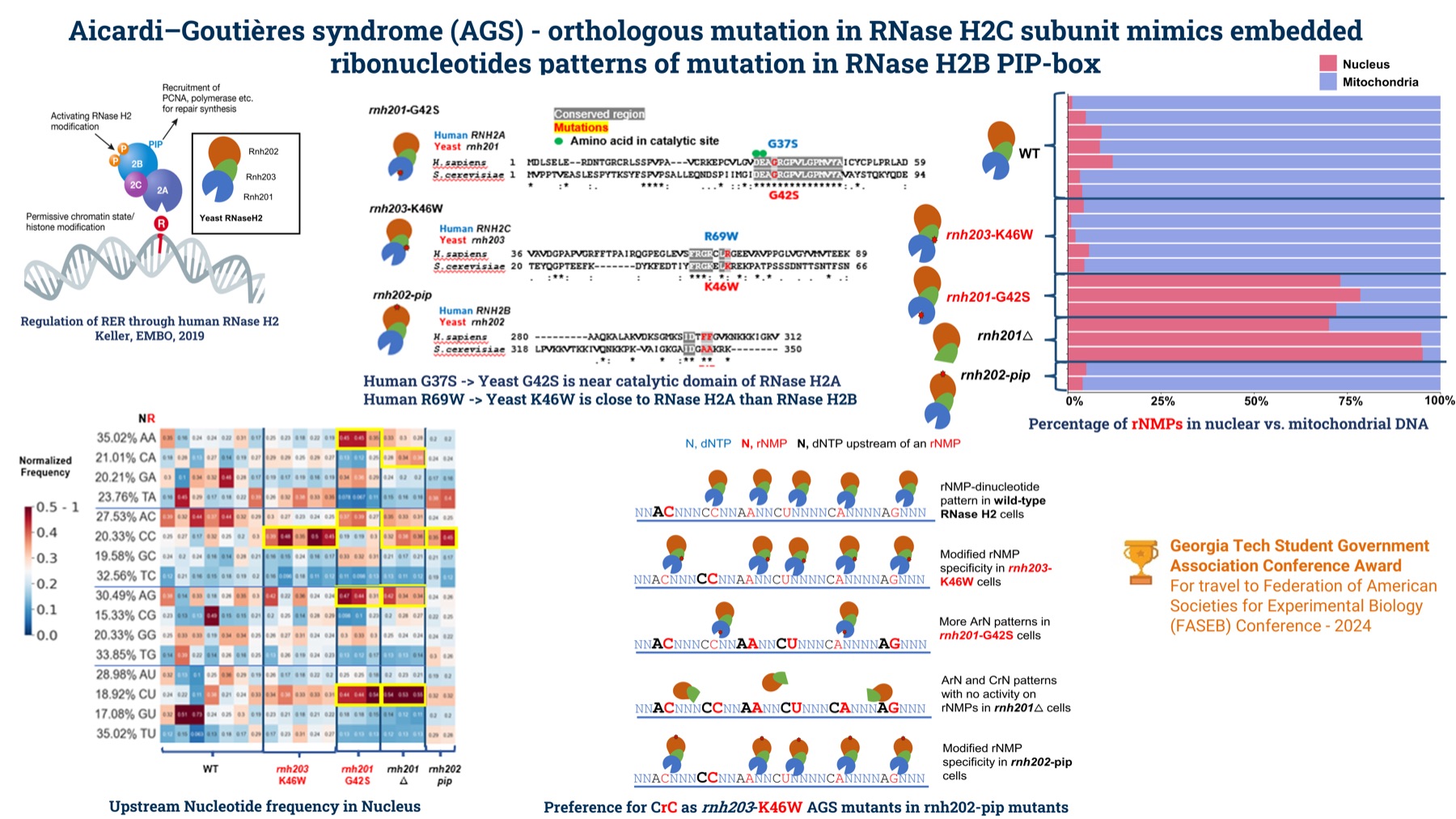
Ribonucleotide features in Aicardi-Goutières syndrome mutants
View full size
Two human AGS orthologs (RNaseH2A-G37S and RNaseH2C-R69W) built in yeast as
rnh201-G42S and rnh203-K46W.
The RNaseH2A mutant cripples enzyme activity: ribonucleotides pile up, concentrated on the
leading strand of replication origins. The RNase H2C mutant showed no significant increase
at all, but the sites moved. Structure shifting specificity, not throughput.
A count-based assay would have called it normal.
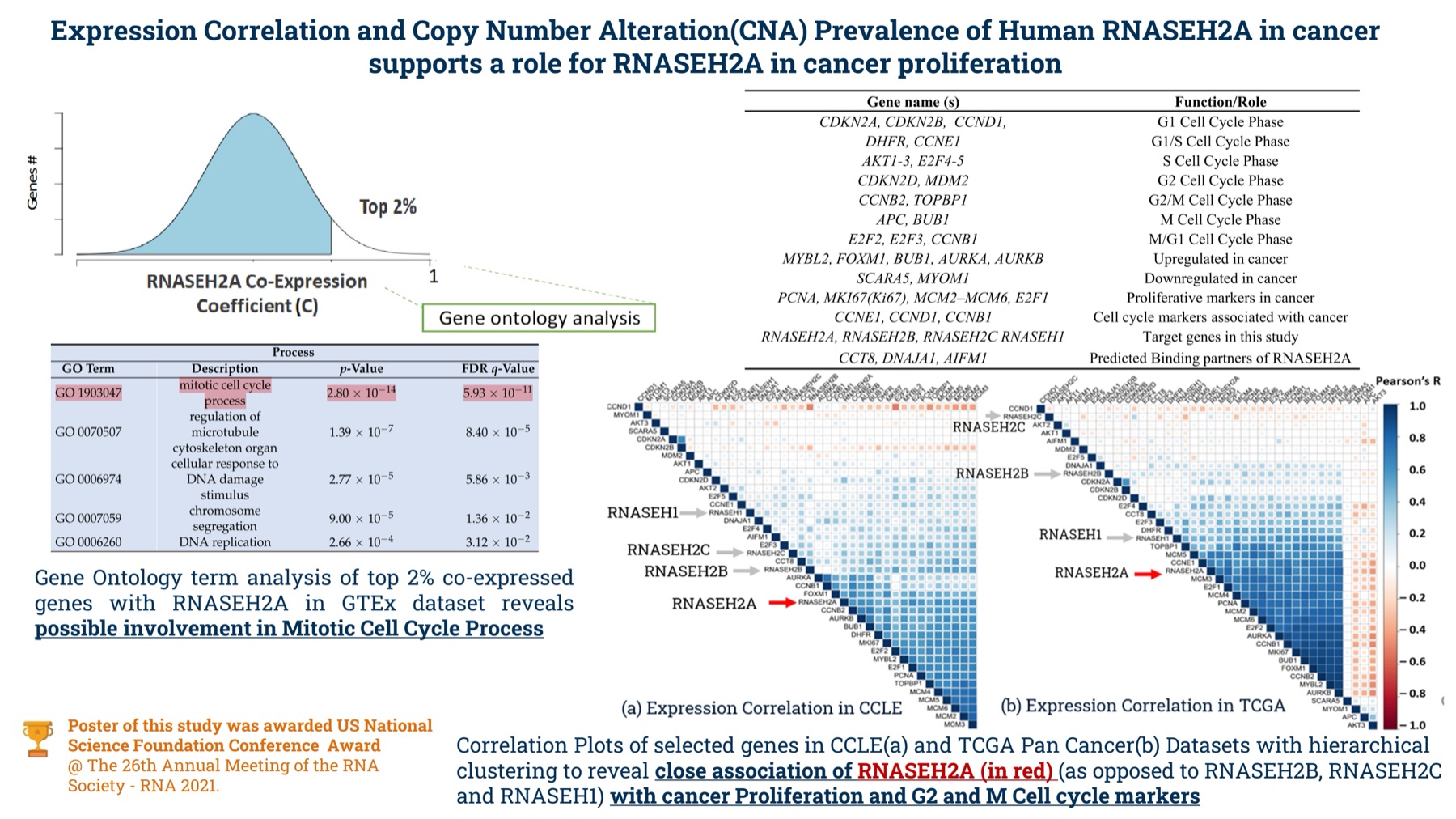
RNASEH2A expression correlated with proliferation and cell-cycle markers across 1,000+ CCLE
cell lines and 10,000+ TCGA patient samples, spanning 35+ cancer types.
Published in
MDPI's Biology,
and awarded a US National Science Foundation Conference Award for the poster at RNA 2021.
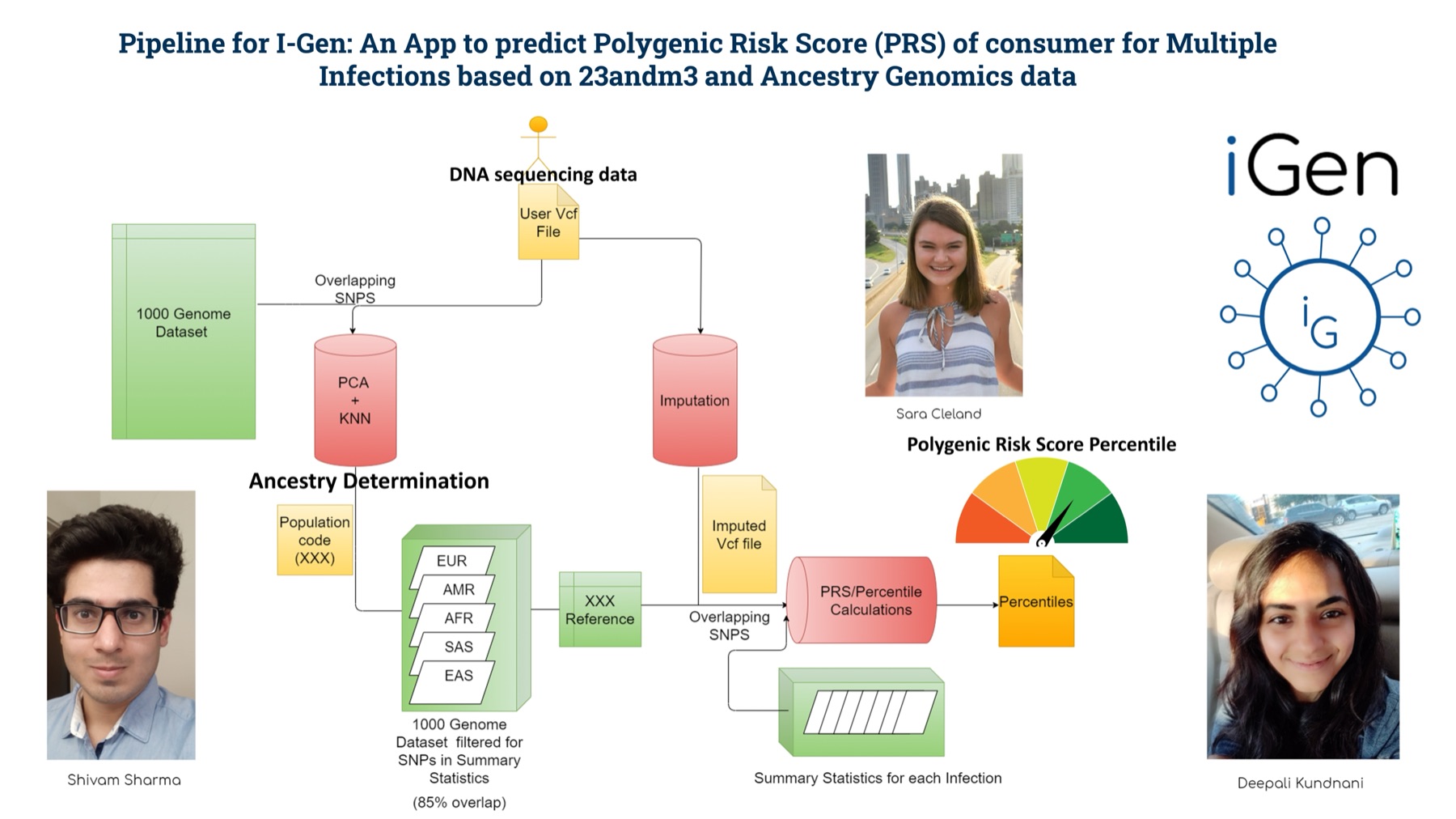
IGen predicts a polygenic risk score for susceptibility to 20+ infections. Built during a
global pandemic, when that question suddenly mattered to everyone.
Input is a consumer sequencing result: 23andMe or Ancestry. I led and designed the
computational pipeline behind it.
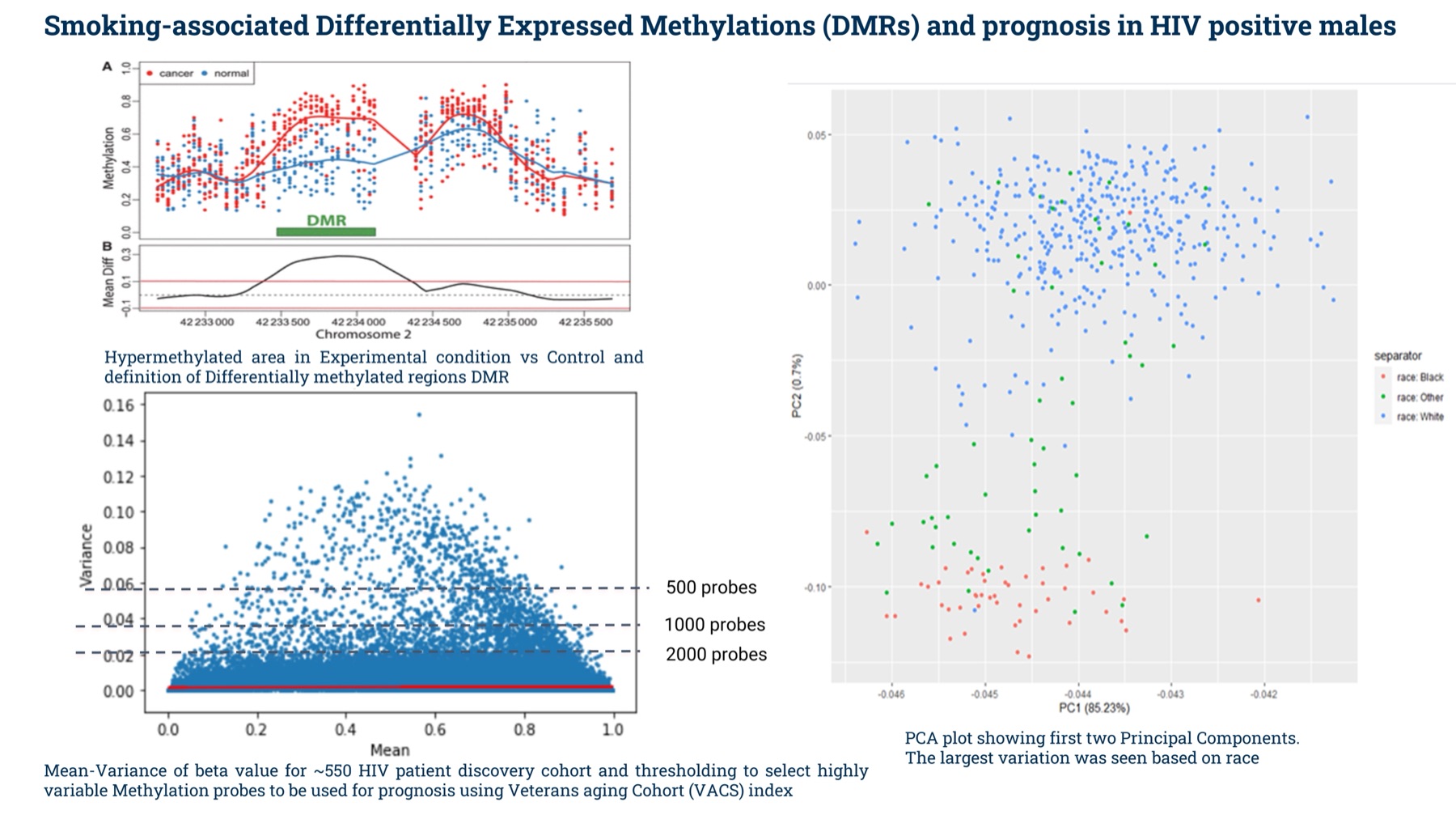
Differentially methylated regions in smokers versus non-smokers, found with Gaussian kernel
smoothing across 900+ HIV patients in Yale's
VACS cohort.
The findings replicated other groups' results, and methylation varied by race.
For survival prediction against the
VACS
Index, support vector machines beat k-nearest neighbours. More lenient thresholding would
surface more features, and likely a usable AUC.
 View full size